

 +91 97699 40000
Why Lift-and-Slide Doors Are Perfect for Open Living Spaces
 June 26, 2026
TL;DR: Lift-and-slide doors represent the pinnacle of indoor-outdoor living, allowing large, heavy glass panels to glide effortlessly, creating seamless transitions between interior spaces and the outdoors. This guide explores how lift-and-slide door systems work, why they outperform conventional sliding doors, and what Indian homeowners should consider when choosing aluminium lift-and-slide doors for their homes.
There’s a moment when you first operate a lift-and-slide door that tends to stop people in their tracks. You turn the handle, feel the panel rise slightly, and then, with almost no effort at all, a wall of glass the size of a large cinema screen glides silently to one side. Where a solid wall existed a moment ago, there is now simply open space: your living room flowing directly into your garden, your terrace, or your pool deck without interruption, without a step, without so much as a threshold to negotiate.
It is, genuinely, one of those experiences that changes how you think about what a home can be. Lift-and-slide sliding doors have been transforming premium residential architecture internationally for some time, and they’ve arrived in India at exactly the right moment. As urban homeowners grow increasingly interested in larger, more open living configurations, homes that breathe, that feel generous, that connect meaningfully with outdoor spaces, the lift slide door has moved from a luxury curiosity to a seriously considered design choice.
If you’re building a new home, undertaking a significant renovation, or simply reconsidering how your living spaces relate to the outdoors, this is a system worth understanding thoroughly.
What Is a Lift-and-Slide Door and How Does It Work?
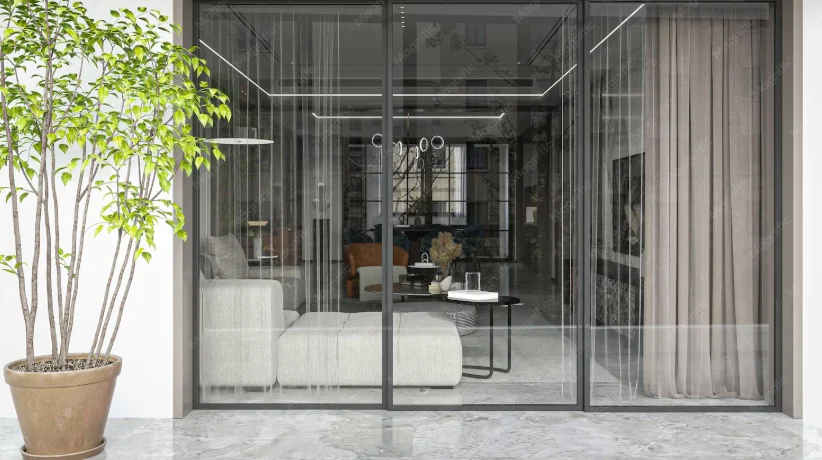
The engineering principle behind the lift slide door is elegant in its simplicity. In a conventional sliding door, the panel rests on its rollers continuously, which means the seals along the bottom of the door are in constant contact with the track. Over time, this creates friction, resistance, and wear. It also limits how large and heavy the glass panels can be before the door becomes difficult to operate.
The lift-and-slide mechanism solves both problems simultaneously. When the handle is rotated, a multi-point locking and lifting mechanism raises the panel by a few millimetres, disengaging it from its bottom seals and transferring its weight onto precision-engineered rollers. At this point, even a panel weighing several hundred kilograms can be moved with the lightest touch, a single finger, in well-engineered systems. When the door is pushed back to its closed position and the handle returned, the panel descends back onto its seals, creating a compression seal along the bottom, sides, and top that is far more effective than anything a conventional slider can achieve.
How Lift-and-Slide Doors Transform Living Spaces: Design and Architecture
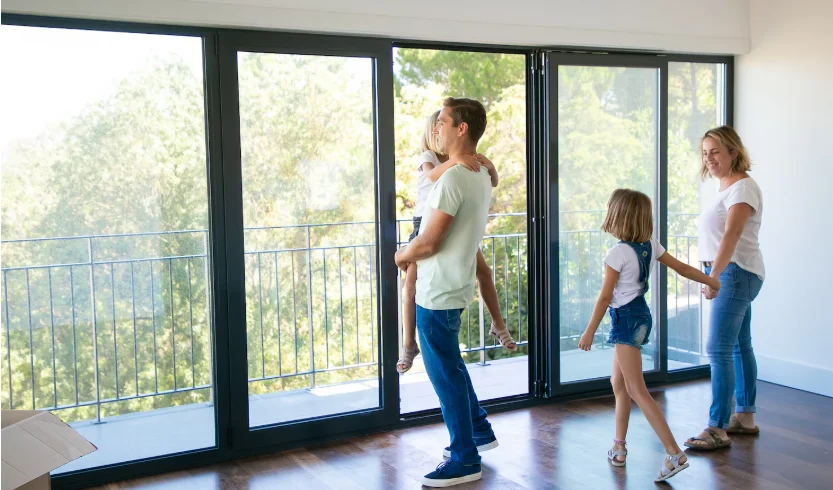
The architectural impact of lift-and-slide sliding doors on a living space is difficult to overstate. When you replace a conventional wall, or even a standard sliding glass door, with a floor-to-ceiling lift slide system across a wide opening, the room is fundamentally transformed.
A typical living room wall might be 10 to 14 feet wide with a height of 8-9 feet. A lift-and-slide system across that opening, with two or three panels stacking to one or both sides when fully open, eliminates that wall entirely. Your living room doesn’t just have a view of the garden; it becomes part of the garden. The floor area effectively doubles when you include the terrace or deck beyond.
Dinner parties spill outdoors without anyone noticing the transition. Children move freely and safely between inside and outside. The morning light, the evening breeze, the sound of rain on leaves, all of it enters the home without filtering, without negotiation. This is the essence of what architects mean by open living, and it’s why the lift-and-slide door has become a defining feature of premium residential architecture globally.
Choosing the Right Lift-and-Slide System: Key Specifications to Evaluate
If you’ve decided that a lift slide door is right for your home, or are seriously considering it, there are several technical specifications worth evaluating carefully before committing to a system.
- Panel size and weight capacity determine what’s possible for the scale of your opening. Different systems have different maximums, and it’s worth understanding these before you finalise your architectural drawings.
- WiWA or equivalent performance certification is non-negotiable. Lift-and-slide doors are typically used in prominent positions, facing gardens, terraces, or outdoor spaces, where they’re fully exposed to the elements. Independently certified ratings for wind resistance, water tightness, and air sealing tell you how the system will actually perform in a monsoon or under coastal wind conditions.
- Sightline width directly affects the visual result. Narrower is better for panoramic views and maximum light transmission.
- Hardware quality and cycle testing, especially the lifting mechanism, rollers, and locking system in a lift-and-slide door are precision components that will be operated daily for decades. Look for systems where these components are rigorously tested and backed by meaningful warranty terms. Eternia’s hardware carries a 5-year brand warranty, with profiles backed by a 12-year warranty.
Conclusion
The lift-and-slide sliding door is not simply a larger version of a conventional sliding glass patio door. It is a fundamentally different system, more sophisticated in its engineering, more ambitious in its scale, and more transformative in its effect on the spaces it serves. When well designed and installed, it doesn’t just open a wall; it redefines the relationship between a home and its surroundings.
For Indian homeowners who are serious about open living, about creating spaces that feel generous, light-filled, and genuinely connected to the outdoors, the aluminium lift and slide door represents the most compelling option available today. The combination of extraordinary scale, certified weather performance, slender sightlines, and low operational effort is simply unmatched by any other door system.
The outdoor space beyond your living room is waiting. A well-chosen lift slide door will make the journey there feel like the most natural thing in the world.

Aluminium vs Wooden Bathroom Doors: Why Modern Homeowners Are Making the Switch

Choosing Aluminium Windows for Homes with Children: Design and Safety Factors

Future of Aluminium Windows and Doors in India – 2026 Technology Trends

Aluminium Windows for Ground Floor Homes: Privacy, Security & Ventilation Balance

How Aluminium Windows Affect Home Resale Value in India: Real Estate Expert Insights

How Aluminium Window Design Can Influence the First Impression of Your Home?

Noise Pollution Solutions: Best Aluminium Windows for Homes Near Roads, Railways & Airports

Aluminium Window Warranties Explained: What Indian Homeowners Must Know Before Buying

Best Aluminium Window Orientations for Indian Homes: North, South, East, West Guide

Top Aluminium Windows and Door Designs for Luxury Farmhouses in 2026
Frequently Asked Questions
A conventional sliding glass door rests continuously on its rollers and seals, limiting panel size and weather performance. A lift slide door mechanically raises the panel off its seals when the handle is engaged, allowing much larger, heavier panels to move effortlessly. When closed, the panel descends back onto its seals, creating a far superior compression seal for weather resistance. The result is a larger opening, better performance, and a smoother operating experience.
Absolutely. Aluminium is inherently corrosion-resistant, making it well-suited to salt air environments. When built on advanced alloys like Duranium, which is 40% stronger than standard aluminium and independently certified for wind and water performance, these systems are specifically engineered to handle the demanding conditions of coastal Indian cities. The ETL LS system from Eternia is certified to resist wind loads of 2.75kPa and water ingress at 600Pa.
This varies by system, but premium lift-and-slide systems can accommodate very large panels. Eternia's Duraslim Edge Lift & Slide handles sash heights up to 3,500mm, widths up to 2,000mm per panel, and weights up to 400 kilograms. These dimensions allow for genuinely panoramic openings that transform the relationship between interior and exterior spaces.
Very easy; this is one of their defining advantages. Despite the potential size and weight of the panels, the lifting mechanism transfers the load to precision rollers, allowing even 400kg panels to move with minimal effort. Quality systems are engineered so that a single person can operate even the largest configurations comfortably, and heavy-duty cycle-tested rollers ensure this ease of operation is maintained over many years of daily use.
Most premium lift-and-slide systems can accommodate a range of glass thicknesses, typically from 10mm to 32mm. Options include clear toughened, double-glazed, laminated, acoustic laminated, tinted, and double-glazed laminated configurations. The right choice depends on your priorities: thermal efficiency for air-conditioned interiors, acoustic performance for urban environments, or solar control for south- and west-facing openings.


Our consultants will give a closer Look!
WHATSAPP VIDEO CALL AT YOUR CONVENIENCE
Schedule a Video call or Request Real Images and Videos