

 +91 97699 40000
Comparing Lift and Slide Doors with Conventional Sliding Doors
 July 16, 2026
Homeowners and architects transform living spaces by choosing the right fixtures for wide openings when they design a modern home. Windows and doors with large glass areas not only bring natural light but also connect indoors with balconies, terraces or garden areas. For ease of operation and long-term performance, opting for the right mechanism is more important than ever.
This is where people consider choosing lift and slide doors and conventional sliding door systems for their homes. But, there is a huge difference between the two when it comes to mechanism and style. This blog explores some of the key differences between the two designs, so you can choose the one that suits you best.
Why Choose an Aluminium Sliding Door with Glass Over Traditional Options?
Before you know the differentiating factors between the two window styles, it is important to understand why premium system aluminium is the preferred material:
- Aluminium is a strong and lightweight material, which does not warp or crack easily, making it best for aluminium sliding door with glass and slim frames.
- Aluminium does not swell, rust, or corrode, which is why it is the top choice for installation in coastal areas.
- A single wipe on the surface once in a while keeps the aluminium windows as good as new for decades.
- Windows with aluminium frames and wide glass areas offer uninterrupted views of the outside and provide maximum natural light inside the space, keeping it bright and cosy.
- Aluminium can be easily customised without losing its properties. So, you can choose door styles such as sliding folding aluminium doors based on the available space and the architectural design.
What is a Conventional Sliding Door?
Being a traditional choice for many households, the conventional sliding systems have been a staple for decades. These doors open horizontally by sliding along the tracks, and to open or close them, you simply have to push the panel horizontally.
There is continuous friction during the movement as the weight of the panel rests entirely on the rollers and stays in constant contact with the track. This is why the heavy glass panels can become progressively harder to slide.
Traditional sliders typically use simple woolpile seals to close the gaps between the sliding panels and the frame, offering basic protection from the elements. While these door systems are commonly installed in apartments due to space constraints, they usually wear out over time.
What Makes a Lift and Slide Door Different?
Unlike conventional sliding doors, the lift and slide sliding doors use advanced mechanical engineering, where through rotating the handle lifts the heavy glass panel onto hidden rollers, solving the friction issues common in large and heavy doors.
When you turn the handle of a lift slide door, the internal gear mechanism lifts the entire door panel a few millimetres off the track. With the push of a finger, the doors once lifted, the panel hovers slightly above the rail, allowing massive and heavy doors to effortlessly glide open.
Creating an incredibly tight seal, the weight of the door compresses the high-quality EPDM gaskets. In harsh weather conditions, the drop mechanism of lift and slide patio doors provides excellent resistance when they are closed.
Why Do Lift and Slide Doors Offer Smoother Operation?
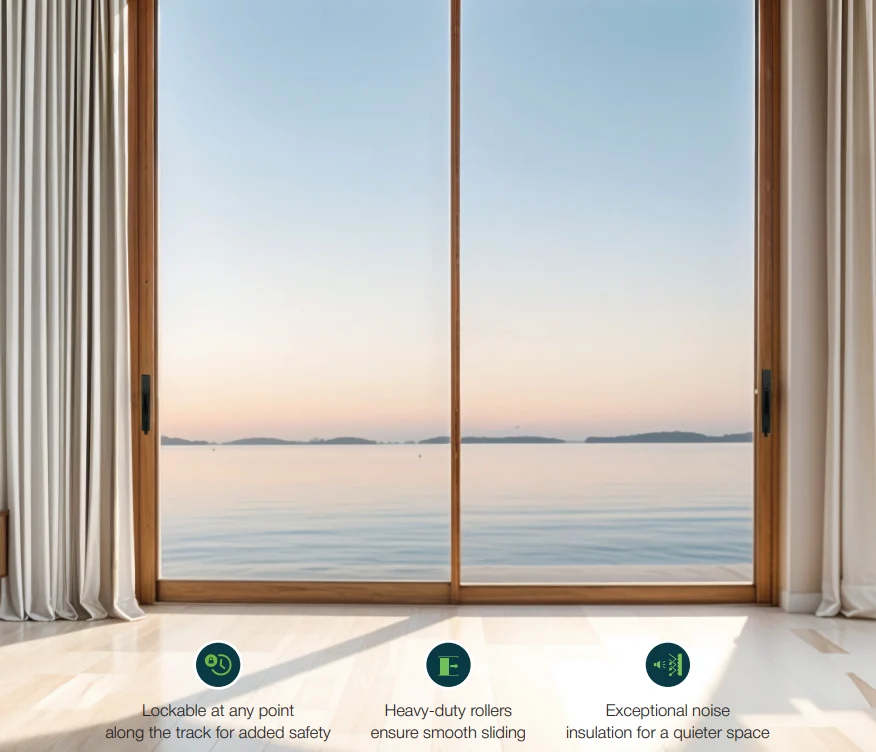
How the door styles operate is one of the biggest differentiating factors between the two. In fold and slide doors, while opening or closing, the lifting action minimises contact between the panel and the track. With just a little more effort, larger and heavier glass panels can be moved, and the operation remains smooth even after frequent daily use.
On the other hand, conventional sliding doors rely entirely on the rollers and move across the track, which comparatively requires more effort with the wider panels.
Which Option Is Better for Large Openings?

Larger openings require doors that can comfortably handle greater panel sizes for spacious balconies, gardens, patios and terraces.
- To accommodate wider spans with ease, the lift and slide aluminium doors are perfectly designed. Without compromising on the visual appeal, they offer smooth operation, and with large openings, they create a seamless transition between indoor and outdoor areas.
- For standard applications, the conventional sliding systems perform pretty well and are generally chosen for comparatively small openings.
Why Choose Eternia Windows Lift and Slide Doors?
With a combination of premium engineering and elegant aesthetics, Eternia Windows delivers high-performance door systems. Here’s why you should choose Eternia’s windows and doors, including lift and slide aluminium doors:
- Providing 40% more strength than regular aluminium alloy, the entire range is made with exclusively patented Duranium.
- Eternia has been certified with WiWA certification, guaranteeing high performance against cyclonic winds, heavy rain, dust and outside noise.
- Slim aluminium profiles for larger glass areas and modern aesthetics
- The brand offers customisable finishes to suit every architectural design and offers a 12-year warranty on profiles and a 5-year warranty on the hardware.
Final Thoughts
Whether you choose a conventional sliding system or a lift and slide door, the right solution depends on your space, design preferences, and performance expectations. For projects that require larger openings, smooth operation, premium aesthetics, and enhanced comfort, patio sliding doors provide several distinct advantages.
By combining advanced engineering with durable aluminium construction, Eternia’s systems offer lasting performance, elegant design, and a quieter, more comfortable living environment.
Discover Eternia’s high-quality aluminium door options, such as fold and slide doors, and see how expertly designed lift and slide systems can enhance your living areas with smooth operation, longevity, and modern style.

How to Prevent Dust from Entering Home Through Windows

Best Aluminium Windows for Humid and Rainy Climates

Are Aluminium Windows Good for Monsoon? Everything Homeowners Should Know

5 Signs It’s Time to Replace Your Old Windows

Aluminium Window Design Ideas to Refresh Your Home This Festive Season

How Aluminium Windows Can Make Your Home Brighter for Festive Celebrations

The Ultimate Buying Guide to Aluminium Windows and Doors for Modern Homes

Window Pane Design Ideas for Modern Homes and Luxury Interiors

Modern Corner Window Designs That Maximise Views and Natural Light

Toughened Glass Windows: Why Every Modern Home Should Consider Them
Frequently Asked Questions
A lift and slide door uses a mechanism that slightly lifts the panel before it slides, allowing smoother movement for larger and heavier panels. Conventional sliding doors move directly on the track, making them suitable for standard applications.
Yes. Lift and slide patio doors are ideal for contemporary homes because they support large glass panels, maximise natural light, and create seamless connections between indoor and outdoor spaces while maintaining elegant aesthetics.
Yes. Aluminium lift and slide doors are known for their strength, corrosion resistance, and long-lasting performance. Premium systems made using high-quality aluminium alloys also provide excellent durability for everyday use.
Lift-and-slide doors with double glazing help reduce outside noise while allowing abundant natural light into the space. When combined with high-quality aluminium frames, they contribute to a quieter, more comfortable indoor environment.
An aluminium sliding door with glass is an excellent choice for many residential and commercial spaces. However, if your project involves larger openings and heavier panels with a focus on effortless operation, lift and slide systems are generally the more suitable option.


Our consultants will give a closer Look!
WHATSAPP VIDEO CALL AT YOUR CONVENIENCE
Schedule a Video call or Request Real Images and Videos