

 +91 97699 40000
The Role of Aluminium Windows in Creating Brighter Living Spaces
Walk into a beautifully lit room, and something shifts almost immediately. The space feels more generous, the colours more alive, and there’s a quality of calm that’s difficult to articulate but impossible to miss. Now walk into the same room with the curtains drawn, the windows small and the frames thick, and the contrast is startling. It feels smaller, heavier, somehow less welcoming, even if nothing else has changed.
Light is the invisible architect of every interior. It determines how colours read, how proportions feel, and how much time you actually want to spend in a given room. And yet, for all its importance, lighting, specifically natural lighting, is one of the most routinely underestimated elements in Indian home design. We obsess over paint colours, furniture layouts, and flooring choices, and then install windows that are too small, too narrow, or too visually cluttered to let the sun do its work.
This is changing. Across India’s residential landscape, from high-rise apartments in Mumbai and Hyderabad to independent bungalows in Pune and holiday homes along the Konkan coast, homeowners and architects are increasingly recognising that the window is not a secondary element. In many cases, it is the single most impactful design decision in a room. And the material and engineering of that window determines how well it performs its central task: bringing the outside in.
How Natural Light Actually Affects the Way We Experience Our Homes?
The science behind natural light and human well-being is well established. Exposure to daylight regulates circadian rhythms, influences mood, improves concentration, and has measurable effects on sleep quality. In practical terms, people who live and work in well-lit spaces report feeling more energised, more positive, and more productive. These aren’t abstract claims; they’re consistent findings across decades of environmental psychology research.
For Indian homeowners specifically, the relationship with natural light carries additional cultural weight. Vastu Shastra, the ancient Indian system of spatial arrangement, places significant emphasis on the orientation and placement of windows precisely because light was understood as a carrier of energy and well-being. Contemporary architecture and modern science have arrived at similar conclusions through entirely different routes.
Why Do Aluminium Windows Outperform Other Materials in Maximising Light?
The relationship between frame material and natural light might not seem immediately obvious, but it becomes clear once you understand the constraints involved. Every window frame is a structural element; it has to support the weight of the glass, resist wind pressure, maintain its shape across temperature changes, and provide a secure fixing point within the wall opening. Different materials have very different capacities to do all of this while remaining visually minimal.
- Wood is beautiful but bulky. To achieve the structural performance required for large glass panels, timber sections need to be relatively deep and wide. The result is a frame that’s warm and characterful, but visually dominant and less suited to the clean, expansive glass-window design.
- uPVC is more stable than wood but similarly limited in terms of slenderness. Because uPVC is not inherently strong, profiles need to incorporate steel reinforcement to handle larger spans, which adds bulk. The resulting frames tend to be visually heavy, particularly in lighter colours, where the profile width becomes very apparent.
- Aluminium is fundamentally different in this regard. Its high strength-to-weight ratio means that the same structural performance can be achieved with far less material. This allows manufacturers to produce slim, elegant profiles that occupy a fraction of the frame area of their wood or uPVC counterparts.
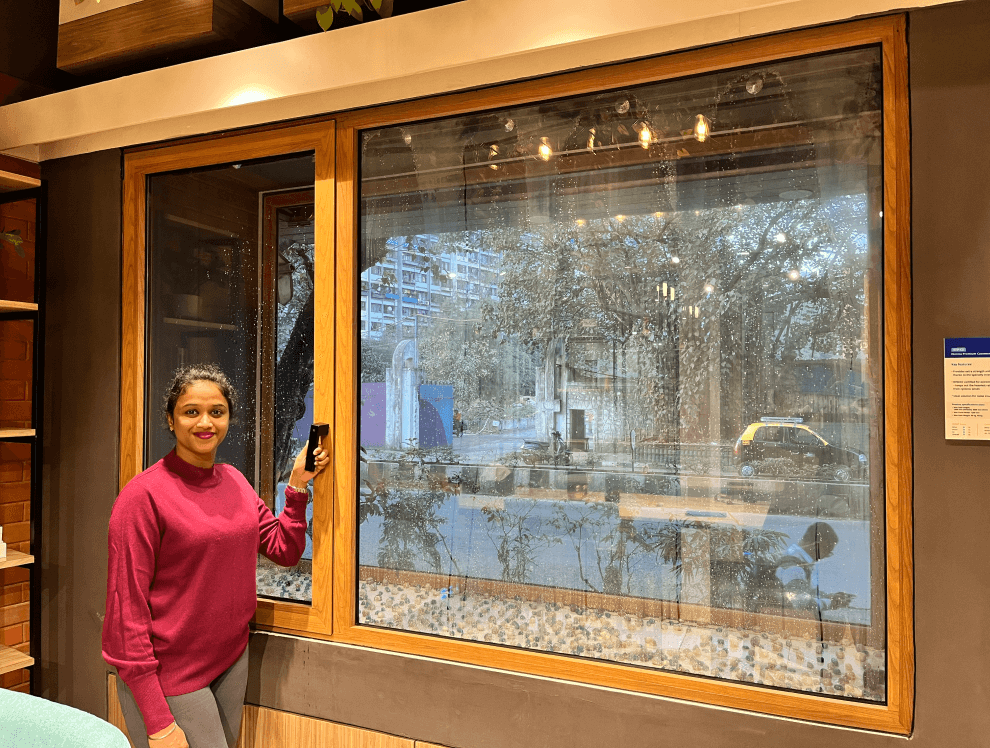
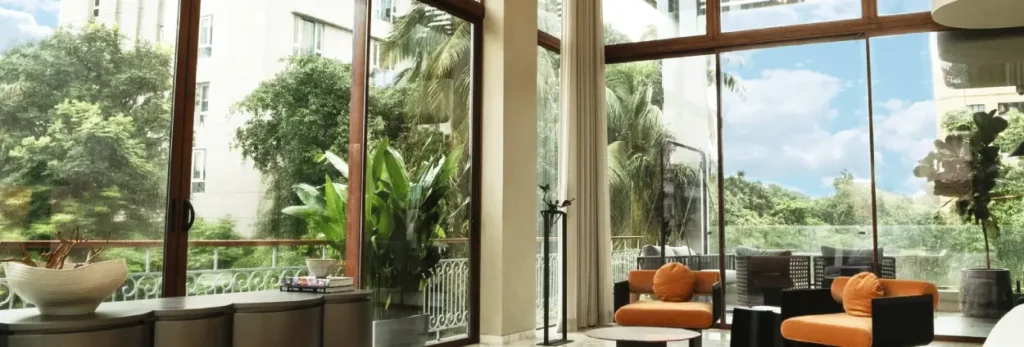
When the aluminium is a high-performance proprietary alloy, such as Duranium, which Hindalco developed specifically for Eternia’s window systems and is 40% stronger than standard aluminium, the profiles can be made even slimmer without compromising structural integrity. Systems using this alloy achieve sightlines as narrow as 20mm, meaning the visible frame in a fully assembled window is barely wider than your thumb. The visual effect is closer to frameless glazing than to a conventional window, and the light transmission is correspondingly excellent.
Designing for Light: Large Windows for Living Rooms and Key Spaces
The living room is the space where the impact of natural light is most acutely felt, and most acutely missed when absent. It’s the room where families gather, where guests are entertained, and where we tend to spend the largest proportion of our waking hours at home. Getting the windows right in this space pays dividends every single day.
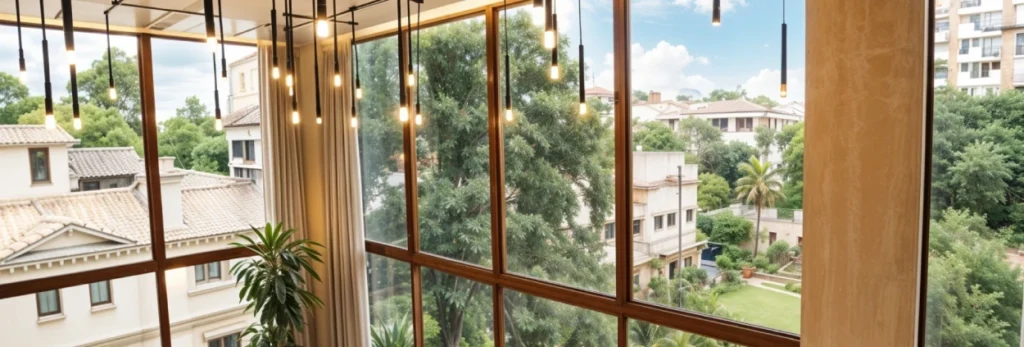
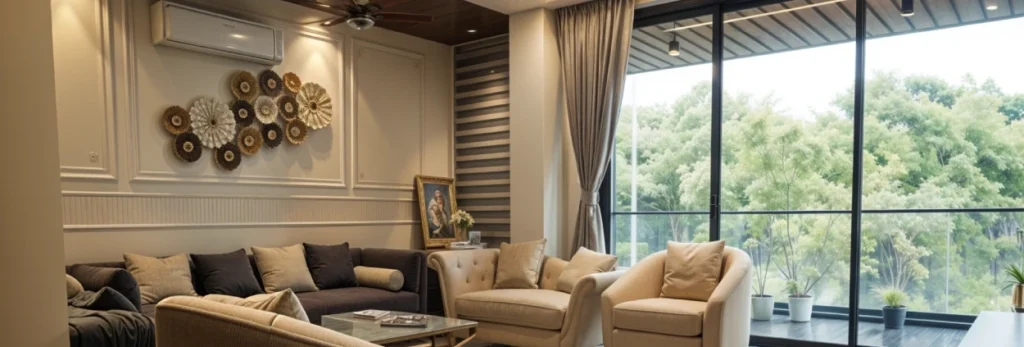
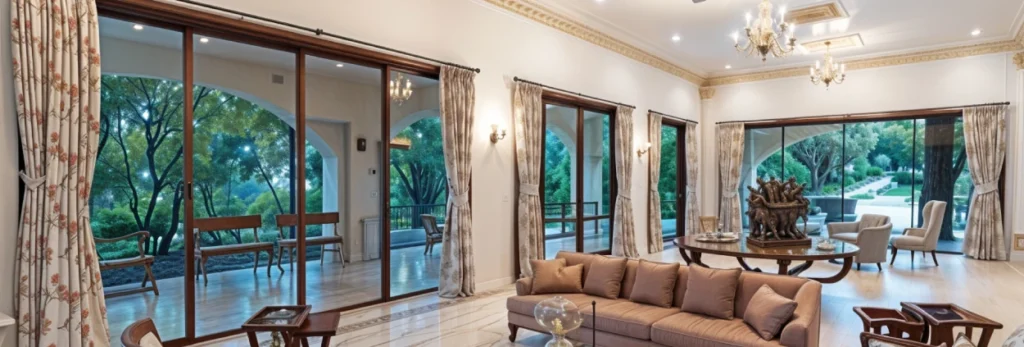
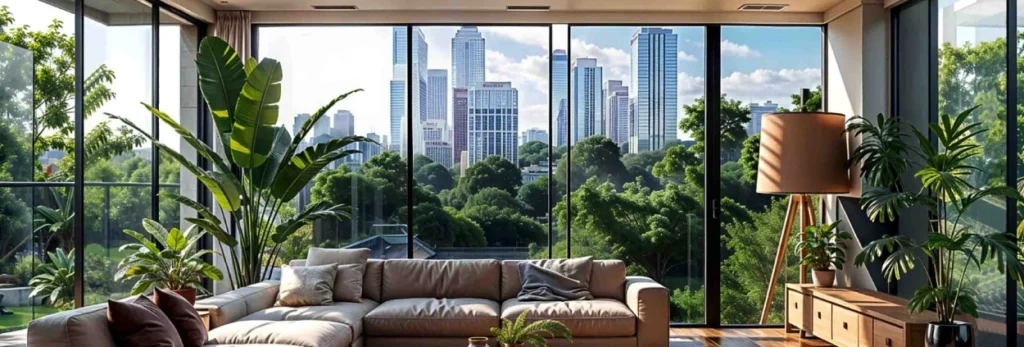
For large windows in the living room, the priority should be maximising glass area while maintaining a clean, uncluttered visual. Wide sliding configurations, two-track or three-track systems with multiple shutters, allow you to create expansive glazed openings that bathe the room in light throughout the day. Fixed panels combined with operable side shutters are another popular choice, particularly where you want the effect of a picture window without sacrificing ventilation.
- Bedrooms benefit enormously from thoughtful window placement and sizing too. A well-placed casement window that admits morning light without directing it straight onto a sleeping face, combined with a larger fixed panel for evening views, creates a room that transitions gracefully through the day. In children’s rooms, generous natural light has been linked to better sleep patterns and improved concentration during study, a practical argument, beyond aesthetics, for investing in quality windows for the house.
- Kitchens are often treated as afterthoughts in the window design conversation, but they shouldn’t be. A well-lit kitchen is a more pleasant place to cook, and natural light makes food preparation, particularly tasks requiring colour judgement, like checking whether vegetables are fresh or meat is properly cooked, significantly easier and safer. A top-hung or side-hung casement window positioned above the worktop brings in light and ventilation precisely where they’re most useful.
Conclusion
Natural light is not a decorative addition to a home; it’s a fundamental component of how a space feels, functions, and supports the wellbeing of the people who live in it. And the single most important determinant of how much natural light your home receives, beyond its orientation, is the quality of its windows.
Premium aluminium windows, slim-profiled, well-engineered, properly specified, are the most effective tool available to Indian homeowners for creating genuinely bright living spaces. They maximise glass area, perform reliably across demanding climatic conditions, and do all of this while looking elegant and requiring minimal maintenance.
The glass window design for homes available today, combined with the range of frame finishes and performance options, mean there’s a solution for virtually every home, every budget tier, and every aesthetic sensibility.
If you’re building or renovating, treat your windows as seriously as any other design decision. The quality of light in your home will reward you for it, every single morning. Explore the large premium aluminium windows for your home today with Eternia!
Frequently Asked Questions
Aluminium's high strength-to-weight ratio allows for slimmer frame profiles than timber or uPVC, meaning a greater proportion of the window opening is glass rather than frame. More glass area means more natural light enters the room. Premium systems built on advanced alloys like Duranium can achieve sightlines as narrow as 20mm, maximising light transmission while maintaining structural integrity.
For living rooms prioritising natural light and views, clear toughened glass offers the highest light transmission. If the room faces south or west and receives intense afternoon sun, tinted or double-glazed units can manage heat gain without significantly reducing brightness. For urban homes near busy roads, acoustic laminated glass allows light in while keeping noise out, a combination that significantly improves everyday comfort.
Yes. Modern aluminium framed windows are available in a wide range of configurations, sizes, colours, and finish options, from sleek contemporary systems suited to modern apartments to wood-grain finishes that complement more traditional or heritage-style homes. Their resistance to humidity, UV exposure, corrosion, and termites makes them suitable across India's diverse climate zones, from coastal cities to high-altitude regions.
Placement is as important as size. East-facing windows placement bring in gentle morning light; south-facing windows provide consistent illumination throughout the day; west-facing windows capture warm evening light. Understanding your home's orientation and planning window sizes, types, and glass specifications accordingly can make an enormous difference to how bright and pleasant each room feels at different times of day.
Well-engineered premium aluminium windows can last several decades with minimal maintenance, no repainting, no re-sealing, no treatment for termites or rot. The long-term value comes not just from durability but from daily quality of life: better light, better views, better acoustic and thermal performance. Brands like Eternia back their products with a 12-year warranty on profiles and a 5-year warranty on hardware, reflecting the confidence that comes with genuine engineering quality.


Our consultants will give a closer Look!
WHATSAPP VIDEO CALL AT YOUR CONVENIENCE
Schedule a Video call or Request Real Images and Videos