

 +91 97699 40000
Understanding Noise Control Through Modern Aluminium Window Systems
 July 30, 2026
There’s a specific quality of silence you notice when you step into a genuinely well-sealed home in the middle of a noisy Indian city. Traffic disappears. Construction fades to a distant murmur. The relentless soundtrack of urban life; horns, sirens, voices, engines, simply falls away. In its place is something almost startling in its rarity: the sound of your own home, your own thoughts, the quiet hum of everyday life without external intrusion.
For most urban Indian homeowners, this kind of quiet is not a daily experience. It’s something encountered occasionally in a hotel, a well-designed office, or a friend’s carefully renovated apartment. And yet the technology to bring it into ordinary residential settings has advanced considerably in recent years.
Modern aluminium window systems, when properly specified with acoustic glass and quality sealing, can make a measurable difference to how a home actually sounds, and, by extension, how it feels to live in.
The Physics of Noise and How It Enters a Home
Understanding how noise enters a home is the first step toward controlling it effectively. Sound travels as pressure waves through the air, and those waves find any available pathway into an enclosed space. In most homes, the primary pathway is not the walls, which are usually thick enough to block substantial sound, but the windows and doors, where thinner materials and potential gaps create weak points in the acoustic envelope.
Two distinct mechanisms are at work. The first is transmission through the material itself, the glass and frame vibrate in response to sound waves and transmit those vibrations into the room as audible sound. The second is leakage through gaps, even microscopic air gaps around a poorly sealed sash allow sound to bypass the material entirely, entering the room through the path of least resistance.
Effective noise reducing glass and soundproof windows address both mechanisms simultaneously. The glass composition must dampen vibration transmission, and the frame sealing must eliminate the air pathways through which sound leaks around the assembly. Get one right and neglect the other, and the acoustic performance falls short. This is why complete window systems, where profile, glass, gaskets, and hardware are engineered as a coherent whole, consistently outperform improvised assemblies that combine components from different sources.
Why Standard Windows Struggle with Noise

Most existing residential windows in India were never designed with acoustic performance as a serious priority. They were built to admit light, allow ventilation, and provide security; noise control was, at best, a happy by-product of adequate construction. In quieter times and less dense environments, this was tolerable. In today’s urban India, it increasingly isn’t.
Standard single-pane glass offers minimal noise reduction. The thin, uniform pane vibrates readily in response to sound waves, transmitting external noise into the room with limited attenuation. Older aluminium and timber frames often lack the precision sealing that would eliminate air gaps around the sash. The result is a window that lets in almost as much sound as it lets in light, a serious problem in bedrooms, home offices, and living spaces where quiet matters.
The rise of acoustic glass windows and soundproof aluminium windows reflects a growing recognition that this default is no longer acceptable for premium residential construction. The technology to do better has existed for some time; what’s changed is that it’s now widely available in mainstream aluminium window systems designed specifically for Indian conditions.
How Acoustic Glass Actually Works
The most impactful upgrade in noise reducing glass over the past two decades has been the development and refinement of acoustic laminated glass, a technology that transforms window acoustic performance without requiring any change to the frame or overall window design.
Acoustic laminated glass consists of two glass layers bonded together with a specialised interlayer designed to dampen sound vibrations. When sound waves hit the outer pane, they cause it to vibrate. The interlayer absorbs much of that vibrational energy, converting it into tiny amounts of heat rather than allowing it to transmit through to the inner pane. The result is measurable reductions in interior noise levels, particularly in the mid-range frequencies that characterise traffic noise, human conversation, and much urban background sound.
Double glazing adds another dimension. Two glass panes separated by an insulating air gap create additional acoustic resistance, further reducing sound transmission. When acoustic laminated glass is combined with double glazing, a configuration Eternia offers as double glazed laminated glass, the noise reduction becomes substantial enough to transform how a room actually sounds.
For homes near busy roads, railway lines, or in dense urban areas, this glass specification is arguably the single most impactful decision available. It works quietly and continuously, requires no operation or maintenance, and delivers measurable acoustic improvement that occupants notice from the day the windows are installed.
The Role of Frame Sealing in Soundproof Aluminium Windows
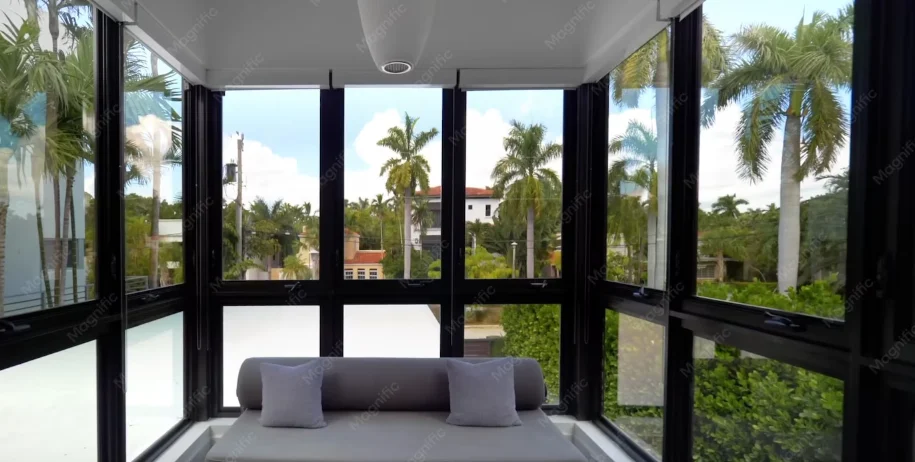
Glass is only half the acoustic equation. The frame, and specifically how it seals against the sash when the window is closed, determines whether the acoustic benefits of premium glass actually reach the interior of the room.
This is where soundproof aluminium windows demonstrate their engineering advantage. High-quality gaskets, fin-based wool pile sealing, and multi-point locking work together to compress the sash firmly against the frame, eliminating the air gaps that would otherwise allow sound to bypass the glass entirely.
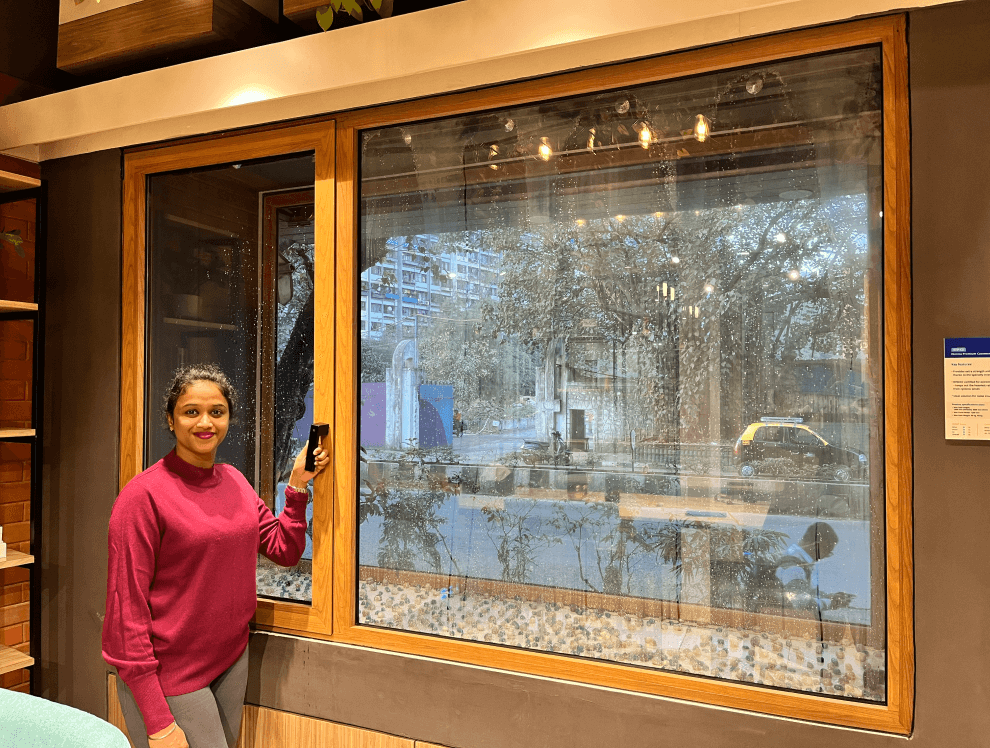
Eternia’s window systems illustrate what quality sealing looks like in practice. The Duraslim Casement carries a WiWA air sealing rating of 10/10, certified to 600Pa, meaning the system creates a genuinely airtight seal when closed. This same seal that keeps out dust, moisture, and unconditioned air is what keeps out unwanted noise. Fin-based silicated wool pile provides continuous contact around the frame perimeter, while multi-point locking ensures uniform compression rather than the localised sealing that single-point locks deliver.
The everyday effect of this precision sealing is what homeowners describe as the room simply feeling quieter, the ambient noise of the outside world reduced to the point where it stops being a source of distraction or stress and becomes something you have to actively listen for to notice.
Acoustic Doors and the Complete Sound Envelope
Focusing on windows without addressing doors is a common oversight when homeowners approach noise control. A room can have beautifully specified acoustic windows and still feel noisy if the doors are letting sound through. Effective noise management requires considering the complete acoustic envelope of a space, with every opening treated with the same care.
Acoustic doors for home use follow similar principles to acoustic windows. Solid, dense door construction reduces vibration transmission. Perimeter seals, often more critical in doors than in windows because doors are operated more frequently and their alignment tolerances are tighter, eliminate the air gaps around the door edge. Acoustic glass panels in glazed doors offer the same noise-reduction benefits as acoustic windows.
For entry doors, this matters particularly for apartments in dense residential buildings, where corridor noise, neighbouring apartment sounds, and building system noise can all penetrate through the front door. For interior doors, particularly those separating bedrooms from living areas, acoustic performance affects the sense of privacy and quiet within the home itself.
Eternia’s Duraslim Casement door range, which shares the acoustic engineering of the window range, offers the same combination of sealing performance and glass specification for consistent noise reduction across doors and windows alike.
Practical Considerations for Indian Homes
Specifying soundproof windows for an Indian home requires balancing acoustic goals with the other demands your windows need to meet: thermal performance, weather resistance, natural ventilation, and cost. A few practical considerations help make this balance work.
- First, prioritise the rooms where quiet matters most. Bedrooms are typically the highest priority; sleep quality is directly affected by ambient noise, and the acoustic upgrade in a bedroom pays daily dividends. Home offices come next, particularly with the growth of remote and hybrid work. Living rooms benefit but are often more forgiving, especially if the primary noise sources are addressable during specific hours.
- Second, consider the specific noise sources you’re managing. Continuous low-frequency noise, like heavy traffic, benefits most from thicker acoustic laminated glass and double glazing. Intermittent, high-frequency noise, such as construction or neighbourhood activity, is well managed by precision sealing and mid-weight acoustic glass. Understanding what you’re actually trying to block helps optimise the specification.
- Third, remember that acoustic windows don’t have to mean permanently sealed rooms. Well-designed aluminium window systems open fully for ventilation when you want fresh air, and seal completely when you want quiet. The best of both worlds is what modern engineering makes possible: genuinely quiet rooms that can also breathe when conditions invite it.
Conclusion
The quiet of a well-sealed, acoustically considered home is one of those things you don’t fully appreciate until you experience it. It’s not dramatic. It doesn’t announce itself. But it changes how a home feels to inhabit, reducing background stress, improving sleep, enabling concentration, and restoring the simple pleasure of hearing your own thoughts without competition.
Modern aluminium window systems, specified with acoustic glass and precision sealing, are the most direct route to this quality in Indian urban homes. The technology is available. The performance is measurable. The daily benefit is real. For homeowners planning a build or renovation in any city where noise has become part of the ambient landscape, this is one of the most valuable investments the home can accommodate.

How to Prevent Dust from Entering Home Through Windows

Best Aluminium Windows for Humid and Rainy Climates

Are Aluminium Windows Good for Monsoon? Everything Homeowners Should Know

5 Signs It’s Time to Replace Your Old Windows

Aluminium Window Design Ideas to Refresh Your Home This Festive Season

How Aluminium Windows Can Make Your Home Brighter for Festive Celebrations

The Ultimate Buying Guide to Aluminium Windows and Doors for Modern Homes

Window Pane Design Ideas for Modern Homes and Luxury Interiors

Modern Corner Window Designs That Maximise Views and Natural Light

Toughened Glass Windows: Why Every Modern Home Should Consider Them
Frequently Asked Questions
Well-specified acoustic aluminium window systems, using laminated or double-glazed laminated glass with quality frame sealing, can typically achieve noise reductions of 35–40 decibels compared to standard single-pane windows. That's the difference between clearly audible traffic and a distant, easily ignored murmur, a transformation that most occupants notice immediately.
For homes in urban environments, near busy roads, or in dense residential areas, the acoustic upgrade is one of the highest-value specifications available. The daily quality-of-life improvement, better sleep, better concentration, greater sense of sanctuary, compounds continuously throughout the life of the home. In quiet suburban or rural settings, the case is less compelling.
Acoustic laminated glass uses a sound-dampening interlayer between two glass panes to reduce vibration transmission. Double glazing uses an insulating air gap between two panes to reduce both thermal and acoustic transmission. The two approaches can be combined, double glazed laminated glass, for maximum performance, and this combination is available in Eternia's window range.
For complete acoustic performance in a room, yes. Doors are often the weakest acoustic link in an otherwise well-sealed room. Acoustic doors, with solid construction, perimeter seals, and, where glazed, acoustic glass, address this weakness. Eternia's Duraslim Casement door range applies the same acoustic engineering principles as the window range.
Retrofitting is possible in some cases, replacing single-pane glass with acoustic laminated glass, or adding secondary glazing, but the results are usually inferior to a full system replacement. Frame sealing, hardware precision, and the interaction between profile geometry and glass thickness are all designed together in complete aluminium window systems. Piecemeal upgrades struggle to match the acoustic performance of purpose-engineered systems.


Our consultants will give a closer Look!
WHATSAPP VIDEO CALL AT YOUR CONVENIENCE
Schedule a Video call or Request Real Images and Videos