

 +91 97699 40000

Understanding Wind Load and Cyclone Ratings for High-Wind Regions
 October 14, 2026
If you’ve ever been inside a flat on the Odisha or Andhra coast while a cyclone comes through, you’ll remember the windows more than anything else. I’ve heard people describe watching the glass actually bow inwards, then finding puddles under sills they’d never once seen leak, and lying awake listening for the next thud from somewhere else in the building.
Most of us never think about how much force is pushing on a window until a night like that. But if you’re building or renovating somewhere the wind gets serious, whether that’s a coastal town or the twentieth floor of a Mumbai tower, it’s the single most important thing to understand before you choose anything.
What Is Wind Load on a Window?
Think of it as the wind leaning on your glass. A light breeze barely registers, but the push doesn’t grow in a straight line as the wind picks up, it shoots up, so a proper gale is leaning on that pane far harder than you’d guess from the speed alone. Engineers measure it in pascals, or kilopascals (kPa) for the bigger numbers, and if you ever want to see how Indian buildings are supposed to account for it, the reference everyone works from is IS 875 Part 3.
What makes it tricky is that the pressure isn’t the same everywhere on a building. Upper floors get hit harder than lower ones, corners catch more than the middle of a wall, and a building standing on its own by the sea takes far more than one tucked in among other blocks. The wind also doesn’t just push. Round the back of a building, on the side the wind isn’t hitting, it can actually tug outward, and that’s how you end up with stories of a pane being pulled clean out of its frame instead of smashed in.
What Do Cyclone Ratings and kPa Numbers Actually Tell You?
Roughly, how hard strong windows for cyclone area were pushed in a test before something gave, whether that was the frame bowing too much, the glass cracking, or the sash popping open. So when you see 2.5 kPa on one spec sheet and 1 kPa on another, you’re not looking at a small difference. On a sea-facing wall up on the tenth floor, that gap is the difference between a window that shrugs off a storm and one you’re nervously watching all night.
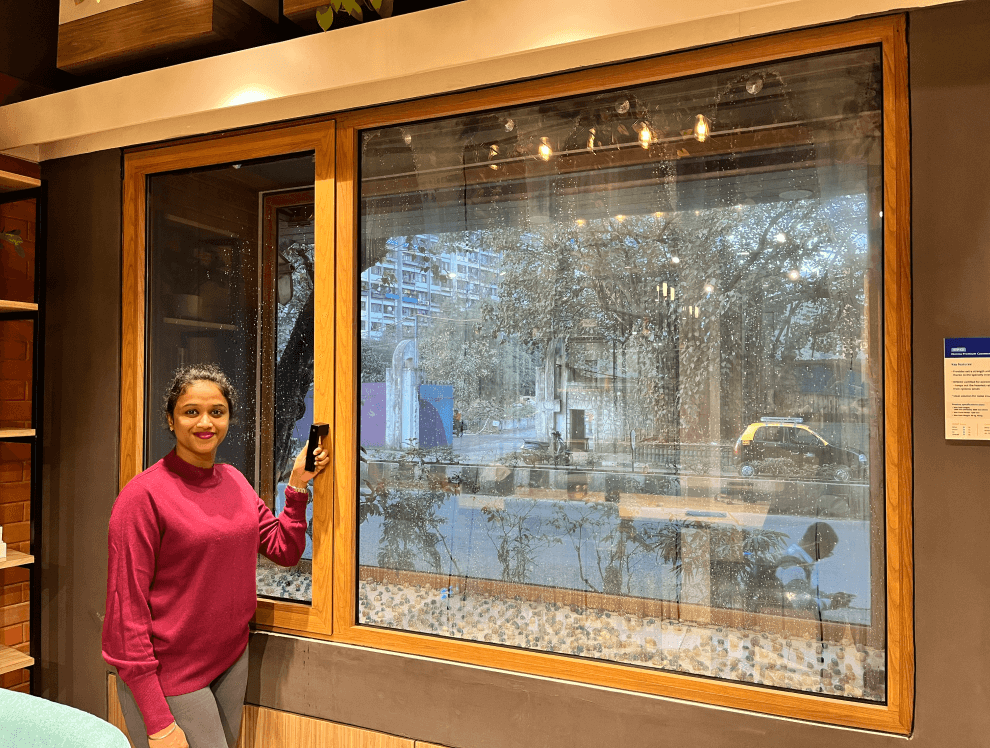
When you’re comparing aluminium casement windows wind pressure, or any other type, ask for the actual tested figure rather than accepting words like “storm-ready” or “heavy duty”. Eternia’s windows, for instance, are tested under its WiWA certification, and its Duraslim casement carries a wind rating of 2.5 kPa alongside water tightness of 750 Pa and air sealing of 600 Pa. Its Duraslim slider is rated for 3 kPa of wind. Having the number in front of you lets you compare one system with another properly, rather than taking each brand’s word for it.
Is There Such a Thing as a Cyclone Proof Window?
Not really, and you should be a little wary of anyone who promises one. A severe cyclone can throw debris around with enough force to damage almost anything, so the honest goal isn’t a window that nothing can touch, it’s a window that’s been tested to hold up to very strong winds and keeps the damage as small as possible if something does hit it.
What people usually mean when they search for cyclone proof windows is strong windows for a cyclone area: frames that won’t twist, locks that won’t be forced open by pressure, seals that keep rain out even when it’s being driven sideways, and glass that stays in one piece. That’s a realistic target, and a good system gets you there.
Why Do the Frame and the Locking Matter So Much?
Because the glass can only be as strong as whatever’s holding it. If the frame flexes under pressure, even slightly, the seal opens up, rain starts coming in, and in the worst case the glass can work loose from its edges.
This is where aluminium framed windows built from a strong alloy earn their place. Eternia’s are made from Duranium, a special aluminium alloy Hindalco developed that’s 40% stronger than regular aluminium, which helps the frame stay rigid when the wind leans on it. Locking matters just as much. A sash held shut at a single point can be pushed open at the far corner when a big gust hits, whereas multi-point locking holds the whole edge of the sash against the frame, so pressure gets spread out instead of finding one weak spot. That’s what makes a window genuinely secure when the weather turns.
Which Glass Should You Use in High-Wind Areas?
Laminated safety glass, wherever the wind is strongest. It’s made of two layers bonded to a tough film in between, so if something does crack it, the glass stays stuck to that film and the pane stays in place, which means wind and rain can’t come pouring through the opening and broken glass doesn’t end up flying across the room.
Toughened glass is a lot stronger than ordinary glass and breaks into small blunt pieces rather than shards, which is a big improvement, but once it breaks the opening is gone. That’s why many people living in cyclone-prone areas choose laminated glass for the most exposed windows, sometimes as part of a double-glazed unit, and save toughened glass for the more sheltered sides of the house. Safety glass windows of either kind are a big step up from the plain glass most older homes still have.
Are Casement or Sliding Windows Better in a Storm?
Honestly, I’d worry less about the style and more about how well the thing’s been built and tested, but there is a reason so many people on the coast lean towards casements. When you close one, the sash sits pressed against the frame all the way round, and when a gust hits it from outside, the wind ends up squashing it even harder into its seals rather than prising it open. That’s a nice thing to have working in your favour on the wall that faces the sea.
A well-made slider relies on its interlocks, woolpile, and track drainage instead. Older sliders earned a bad reputation in storms, but modern storm aluminium windows of the sliding type, with proper sealing and a high tested rating, hold up very well. The type matters less than the tested numbers and the quality of the aluminium window systems behind it.
How Do You Keep Rain Out During a Storm?
Wind and rain arrive together in a cyclone, so a window that only stands up to pressure isn’t enough on its own. Wind-driven rain gets pushed into every gap, and what keeps it out is a combination of tight seals and drainage that lets any water getting into the frame find its way back outside rather than onto your floor.
Rainstorm proof windows, in the practical sense, are the ones with a strong water tightness rating as well as a strong wind rating. A figure like 750 Pa on a casement means it has been tested against rain being driven at it with real force, which is exactly what happens on a coastal balcony in the middle of a storm.
A Visakhapatnam Flat That Came Through the Season Dry
A family we heard about in Visakhapatnam lived on the eleventh floor of a block facing the sea, and every cyclone season followed the same routine. They’d tape the windows, stuff towels along the sills, and spend the stormiest nights moving buckets around as water came in under the old sliders.
When they finally replaced them, they went for aluminium casements with laminated glass on the sea-facing side, and well-sealed sliders on the more sheltered side of the flat, all from one system with certified wind and water ratings. The next season brought a couple of rough storms, and for the first time the towels stayed in the cupboard and nobody spent the night watching the glass.
Conclusion
If you live somewhere where the wind is part of the weather report every year, it’s worth treating your windows as a safety decision rather than just a design one. Look for tested numbers, a strong frame, proper locking, and the right glass in the right places, and you’ll sleep a lot better when the next storm comes in.
If you’re planning secure windows for a coastal home or a high-rise flat, take a look at Eternia’s aluminium window systems, which are WiWA certified for wind, water, and air and built on Duranium to stand up to India’s toughest weather. Book your session today


Frequently Asked Questions
In plain terms, it’s how much push from the wind the window coped with when it was tested before anything gave way. You don’t really need to understand the physics. Just know that a bigger number is what you want if your flat faces the sea or sits a good few floors up.
I’d be suspicious of anyone who tells you theirs is. A bad enough cyclone can send roof sheets and branches flying, and nothing’s going to be truly untouchable against that. What you can get is a window that’s been tested against very strong wind and driving rain, and glass that stays put even if something does crack it, which is honestly what keeps people safe.
If it were my sea-facing bedroom, I’d go for laminated. When it cracks, the pieces stay stuck to the layer in the middle, so the window’s still sort of doing its job and you don’t get shards across the floor. Toughened glass is a lot stronger than the ordinary stuff and fine for the sheltered side of the house, but once it goes, there’s nothing left in the frame.
They’ve got a bit of an edge on the windiest walls, because the gusts end up pressing them shut harder. That said, I’ve seen good sliders with high tested ratings hold up perfectly well on coastal blocks, so don’t rule them out. Compare the actual numbers on the spec sheet before you decide.
Start by asking whoever’s quoting you for the tested wind, water, and air figures, in writing. Then think about where your flat actually sits, how high, which way it faces, whether there’s anything around it to break the wind. If you’re very high up or right on the seafront, it’s worth having a quick word with your building’s structural consultant as well.


Our consultants will give a closer Look!
WHATSAPP VIDEO CALL AT YOUR CONVENIENCE
Schedule a Video call or Request Real Images and Videos