

 +91 97699 40000

Kitchen Renovation Guide: Ideas, Costs & Step-by-Step Tips
 October 13, 2026
Every Indian kitchen has a moment of truth. It’s 8 pm, the tadka hits the oil, and within about four seconds the whole house knows what’s for dinner. The chimney’s roaring. Someone’s coughing in the living room. And the kitchen window, if there even is one, is open about three inches because the frame won’t go any further.
Most kitchen renovations focus on the bits you see in magazines. Quartz counters, handleless cabinets, a fancy tap. All nice. But if the room still fills with smoke and gets unbearably hot by noon, nobody’s enjoying the quartz.
So this guide starts where kitchens actually live or die: the window.
Why Should the Kitchen Window Come First in a Renovation?
It decides the layout. The sink usually wants to sit under or near it, and you’d ideally have the hob somewhere the smoke can find its way out without a gust from outside snuffing your flame every time you turn your back. The chimney duct often runs out near it too.
If you leave the window until the end, you’ll probably find yourself paying the plumber twice, getting a freshly cut counter recut, or dragging the chimney to a new spot. Get it settled at the start and the rest of the plan tends to arrange itself around it.
What Makes a Good Kitchen Ventilation Window?
You’ll be opening it every single day, usually while something’s on the stove, so it has to open properly without getting in the way of anything else on the counter.
Think about where it is. Most kitchen windows sit over a counter, which means you’re leaning across the sink or the gas to reach them. So they should be easy to open with one hand. They should also open wide enough to actually move air, not just crack open.
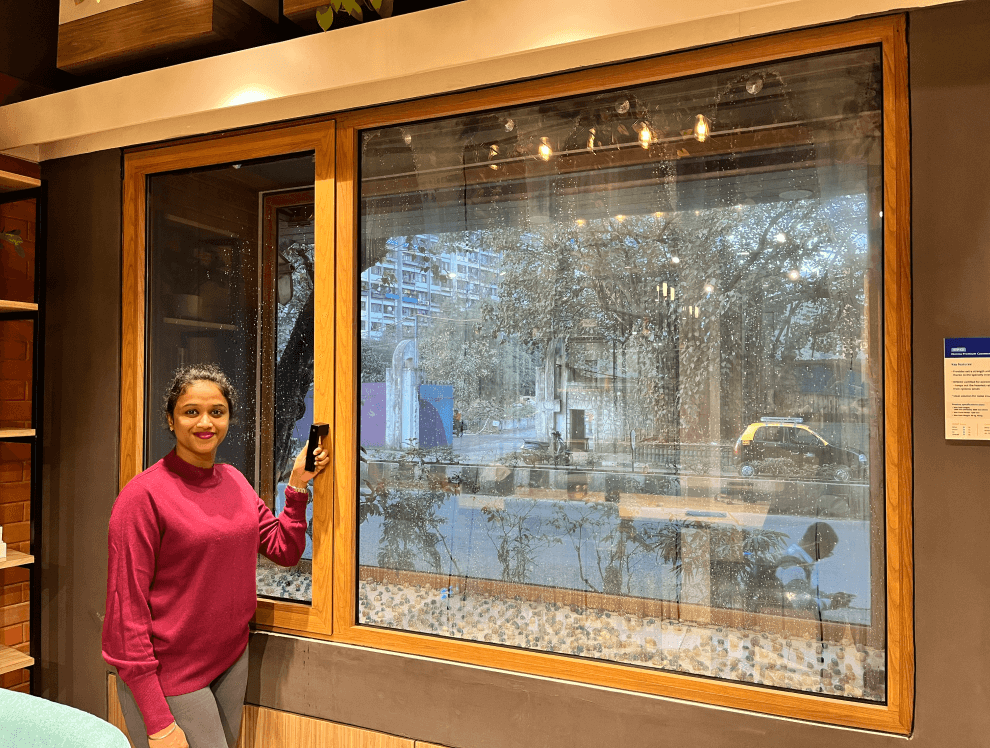
Aluminium casement windows are often the best kitchen ventilation window for exactly this reason. Because the sash opens outwards, you can leave your bottles and that little row of masala dabbas exactly where they are on the sill, and when it’s open it catches whatever breeze there is and steers it through the room. When you shut it, it pulls tight against the frame, so you’re not wiping monsoon rain or road dust off the counter the next morning.
A slider is a good alternative if your opening is on the wider side, and if you get one with mesh built in, you can leave it open right through dinner without spending the meal swatting mosquitoes.
Kitchen Window Ideas That Actually Work
A few that come up again and again in renovations that turn out well:
Window over the sink. Classic for a reason. Daylight where you’re washing up, a view while you’re doing it, and it naturally pulls steam out.
A casement beside the hob. Not directly behind the flame, but close enough to give smoke a quick exit.
A fixed pane plus an opening section. If there’s a nice view, a big aluminium fixed window brings in light, with a smaller casement beside it for air.
High windows in tight kitchens. If you’ve got one of those narrow galley kitchens that most flats seem to come with, a window set up high above the top cabinets lets out the hot air that hangs around near the ceiling, and you don’t lose any wall you’d otherwise use for shelves.
Frosted lower glass. If the kitchen faces a neighbour’s window a few feet away, frosted glass on the bottom half keeps the light in and loses the view.
What About Modern Kitchen Window Design and Frame Colour?
Slim frames suit modern kitchens, since they don’t add visual clutter to a room already full of appliances and shelves. Aluminium does slim well because it’s strong for its weight, so a narrow frame can still hold a decent-sized pane.
When it comes to colour, it usually works out better if you pick the frame to suit the kitchen you’re building rather than designing the kitchen around whatever frame you happened to like. If your cabinets are white or a pale grey, a graphite or black frame tends to look really crisp next to them.
If you’ve gone for warmer wood tones, a walnut or teak wood-grain finish sits much more naturally, and it won’t swell and peel in the steam the way a real timber frame would after a couple of years. Aluminium kitchen window designs these days come in enough finishes that you shouldn’t have to compromise.
Should You Add a Kitchen Aluminium Sliding Door?
If the kitchen opens onto a utility balcony, it’s worth thinking about. A lot of Indian flats have that little drying-and-washing balcony off the kitchen, usually behind a narrow, clunky door.
Swap it for a kitchen aluminium sliding door with good glass, and suddenly you’ve got extra light, a cross-breeze between the window and the door, and an easy walk out with a laundry basket. It slides, so it doesn’t swing into your cooking space. And it seals when shut, so rain doesn’t blow in onto the floor.
What Should a Kitchen Renovation Cost You?
Honestly, it depends so much on your kitchen that any number we gave you would be wrong for most people, so it’s more useful to understand where the money goes.
The biggest jump usually comes the moment you decide to move something, because shifting the sink, the gas line, or the chimney means a plumber, a gas fitter, and a fair amount of breaking and patching. After that it’s the cabinets and counters, where the difference between a basic laminate and a stone top can be bigger than you’d guess. Then appliances. Then windows and doors, which depend on size, window type, glass, and whether you’re going for an engineered aluminium system or something locally fabricated.
If you have to trim somewhere, trim the tiles and handles, not the plumbing, wiring, or ventilation, because once those are sealed behind a finished wall, fixing them means breaking the wall again, whereas you can change a cabinet handle on a Sunday afternoon.
How to Plan a Kitchen Renovation, Step by Step?
Start by standing in your kitchen while you cook a proper meal and noticing what actually bothers you, whether that’s the heat, the smoke drifting into the living room, the corner that’s always too dark, or the fact that there’s nowhere to put anything down. That list is your brief.
Once you know what’s wrong, decide where the window goes and whether you’re changing the balcony door, because those two decisions shape everything else. With them fixed, you can work out where the sink, hob, chimney, and fridge sit around them.
Then get the plumber, gas fitter, and electrician in before a single cabinet goes up, so all the pipes and wires are where they need to be. Only after that do you choose cabinets and counters, and you leave the tiles, lights, and handles for last. It feels slow, but it’s the order that saves you from pulling out something you’ve just paid to put in.
Why Aluminium Works So Well in Kitchens?
A kitchen window spends its life getting steamed every morning, splattered with oil every evening, and scrubbed every weekend, which is more than most windows in the house ever have to put up with. Timber swells and the paint lifts. Cheap frames stain or rust.
Aluminium kitchen windows don’t absorb moisture, don’t rot, and wipe down easily. Eternia’s systems are built on Duranium, a special aluminium alloy Hindalco developed that’s 40% stronger than regular aluminium, and its casements are WiWA certified for water tightness up to 750Pa, so they hold up to the steam inside and the monsoon outside. Profiles carry a 12-year warranty.
Conclusion
Plan the light and the air first, and the rest of a kitchen renovation gets a lot easier. Good cabinets are nice. A kitchen you can actually breathe in is better.
If you’re in the middle of planning a kitchen of your own, have a look at Eternia’s aluminium kitchen windows and sliding doors, which are made to cope with the steam and heat of everyday Indian cooking as well as whatever the monsoon throws at them. Call Us Now





Frequently Asked Questions
For most Indian kitchens, an aluminium casement window. It swings outward, opens wide for smoke and steam, and seals tight when closed. Sliders are good on wider openings, especially with mesh.
In most homes, people put it above or right beside the sink, which gives you light where you’re washing up and helps the steam escape. You can put one near the hob as well to help with the smoke, as long as it isn’t right behind the burner, where a sudden breeze could put the flame out.
You do. A chimney is good at pulling the smoke away from the stove, but it can’t bring fresh air into the room or let the general heat and steam escape, so the kitchen still feels stuffy without a window, and the chimney actually works better when there’s air coming in from somewhere.
Absolutely, and it’s one of the more useful upgrades. You get more daylight in the kitchen, a breeze that can run from the window right through to the balcony, and it’s far easier to get out there with a bucket of washing. Just make sure the one you pick closes snugly, so the rain stays out on the balcony.
The cost mostly depends on how much you’re changing. Moving the sink, gas, or chimney is usually what pushes the bill up fastest, followed by the cabinets, the counter material, and appliances, with the windows and doors depending on their size and glass. That’s why it pays to settle the window and layout before anything else, so you’re not paying to redo work halfway through.


Our consultants will give a closer Look!
WHATSAPP VIDEO CALL AT YOUR CONVENIENCE
Schedule a Video call or Request Real Images and Videos