

 +91 97699 40000
Best Aluminium Windows for Panoramic Outdoor Views
 June 23, 2026
TL;DR: The right aluminium windows can fundamentally transform how your home feels, flooding rooms with natural light, framing outdoor views, and connecting you to your surroundings. This guide walks through everything Indian homeowners need to consider when choosing premium aluminium windows, from frame profiles and glass options to performance ratings and design styles.
There’s a particular kind of satisfaction in sitting in your living room and feeling genuinely connected to the world outside, watching monsoon rain fall across a garden, catching the evening light as it shifts across a city skyline, or simply letting the greenery beyond your window become part of the room itself. Most of us have experienced this in a hotel, a well-designed restaurant, or a friend’s beautifully renovated home, and thought: I want that.
What we’re often responding to, without necessarily realising it, is the quality of the windows. Not the view itself, though that certainly helps, but the way the window frames and presents that view. A poorly designed window chops up a vista with thick, intrusive frames. A well-designed one steps aside and lets the outside world speak for itself.
For homeowners across India who are building, renovating, or simply reconsidering their interiors, the question of which windows to choose is one worth taking seriously. And increasingly, the answer points firmly toward aluminium, specifically, premium aluminium windows engineered for performance, durability, and visual elegance. But not all aluminium windows are created equal, and understanding the difference is what this guide is here to help with.
Why Aluminium Has Become the Preferred Choice for Modern Indian Homes?
For a long time, the Indian window market was dominated by a straightforward choice: wood or uPVC.
- Wood offered warmth and natural beauty but came with well-documented vulnerabilities, warping in humidity, swelling during monsoons, susceptibility to termites, and the constant maintenance burden of repainting and resealing.
- uPVC addressed some of those concerns but introduced its own limitations: bulky profiles, limited colour options, and a tendency to discolour or become brittle over time when exposed to intense UV.
Aluminium windows have quietly resolved most of these tensions, and the market has taken notice. Modern aluminium framed windows are corrosion-resistant, dimensionally stable in all weather conditions, termite-proof, and available in a far wider range of colours and finishes than either wood or uPVC. They don’t warp, they don’t swell, and they don’t need repainting.
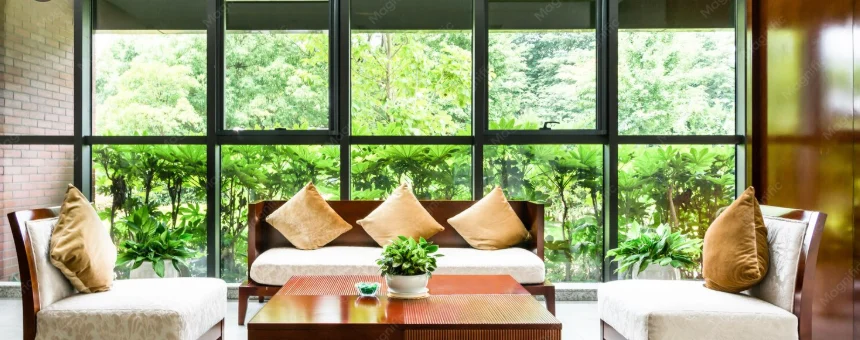
But perhaps the most significant advantage, and the one most relevant to the pursuit of uninterrupted outdoor views, is aluminium’s strength-to-weight ratio. Because aluminium is structurally strong, frames can be made considerably slimmer than uPVC equivalents while still safely supporting large glass panels. Slimmer frames mean more glass area, which means more light, better views, and a more visually open result.
Understanding Frame Profiles: Why Sightlines Matter More Than You Think
When you’re evaluating aluminium windows, one of the most important, and frequently overlooked, specifications is the sightline. This refers to the visible width of the frame when you look at a window from inside the room. A wide sightline means a chunky, visually dominant frame. A narrow sightline means the frame recedes, and the glass, and whatever lies beyond it, takes centre stage.
For homeowners seeking large windows for living room or any space where the view matters, sightline width can make or break the result. This is why premium aluminium windows are worth the investment over standard alternatives. Systems built on stronger alloys can achieve high structural integrity with far less material, resulting in those elegantly slender frames that characterise the best glass window designs for home use today.
Glass Window Design for Home: Matching Window Style to Your Space
Choosing the right glass window design for your home isn’t simply a matter of picking something that looks good in a catalogue. Different spaces have different requirements, and the right window design for a bedroom is quite different from the right choice for a living room, a kitchen, or a study.
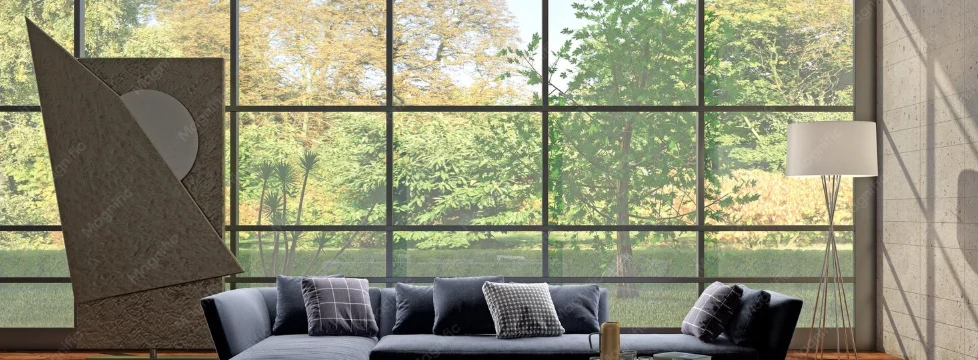
- Living rooms and reception areas benefit most from large, uninterrupted glass expanses. Wide sliding windows, particularly two-track or three-track configurations with multiple shutters, allow you to maximise both the view and the ventilation. If the living room faces a garden, a terrace, or a particularly scenic external view, consider a fixed panel combined with operable shutters on either side.
- Bedrooms call for a more considered balance. You want natural light and a connection to the outdoors, but you also need privacy, sound insulation, and control over light levels. Casement windows, either single- or double-shutter, work particularly well here.
- Kitchens and service areas are often neglected in the window design conversation, but they shouldn’t be. A well-placed casement or top-hung window in a kitchen brings in ventilation precisely where it’s needed, reduces cooking odours, and makes what is often a confined space feel considerably more pleasant to work in.
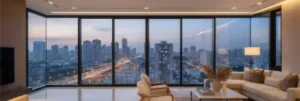
Corner windows and panoramic configurations are an increasingly popular choice for premium homes. By placing windows on two adjacent walls or wrapping a corner with a continuous glazed element, you can create a genuinely spectacular visual effect, making a room feel as if it’s floating within the landscape rather than sitting behind it.
Performance Considerations: What Best Quality Aluminium Windows Must Deliver
Beauty is necessary but not sufficient. The best-quality aluminium windows must also perform reliably and consistently across the full range of conditions they’ll encounter over their lifetime. For Indian homes, those conditions can be demanding: monsoon-season rainfall, coastal salt air, high humidity, intense UV exposure, and, in some regions, sustained wind loads associated with cyclonic weather.
- Weather resistance is the most critical performance parameter. A window that lets in water during heavy rain isn’t just inconvenient; it causes structural damage to walls, floors, and finishes over time. Eternia’s WiWA certification, a patented performance rating system, tests windows against specific, measurable standards for wind, water, and air performance.
- Acoustic performance is increasingly relevant as Indian cities grow denser and noisier. Double-glazed and acoustic-laminated glass options, combined with high-quality gaskets and fin-based wool-pile seals, can dramatically reduce external noise transmission.
- Thermal performance matters for comfort and energy efficiency. Windows with effective air sealing reduce the load on air conditioning systems, particularly relevant in India’s long, hot summers.
- Security is a practical consideration that’s easy to overlook when focused on aesthetics. Reinforced frames, multi-point locking mechanisms, and shatter-resistant glass options are features of well-engineered premium aluminium windows.
Colour, Finish and Aesthetic Choices: Making the Frame Work for Your Interior
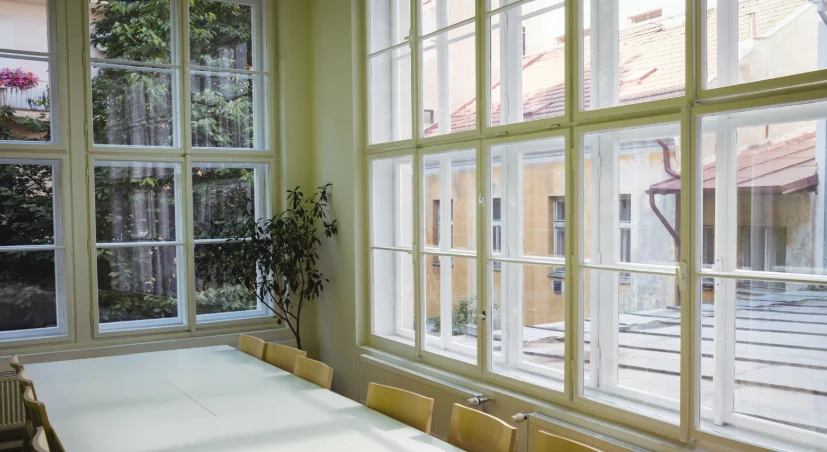
One of the most liberating aspects of modern aluminium framed windows is the sheer range of finish options available. The days of aluminium meaning either bare silver or a flat, uninspiring white are long gone.
- For interiors with a contemporary or Scandinavian sensibility, Pearl White and Moon Silver offer clean, understated elegance.
- For darker, moodier schemes, increasingly popular in premium urban apartments, Graphite Grey, Night Black, and Starlight Black create a bold architectural statement.
The contrast of a dark aluminium frame against white or off-white walls has a particularly strong visual effect, lending the windows a gallery-like quality. For homeowners who love the warmth of wood but want none of its maintenance demands, wood-grain finishes: Teak Wood, Oak Wood, and Walnut offer a convincing alternative.
Conclusion
Choosing the right aluminium windows for your home is one of those decisions that rewards careful thought. The options are genuinely varied, the technical specifications matter more than most people realise, and the long-term impact on how your home looks and feels is significant. Get it right, and your windows become one of the most satisfying elements of your home, quietly doing their job, framing your world beautifully, and requiring very little from you in return.
The shift toward premium aluminium windows in India reflects a broader maturation of the market. Homeowners are more informed, expectations are higher, and the products available have risen to meet them. If you’re building or renovating, invest the time to understand your options; profile widths, glass specifications, performance certifications, and finish choices all matter. The view beyond your window is waiting. The right frame will do it justice.

Aluminium vs Wooden Bathroom Doors: Why Modern Homeowners Are Making the Switch

Choosing Aluminium Windows for Homes with Children: Design and Safety Factors

Future of Aluminium Windows and Doors in India – 2026 Technology Trends

Aluminium Windows for Ground Floor Homes: Privacy, Security & Ventilation Balance

How Aluminium Windows Affect Home Resale Value in India: Real Estate Expert Insights

How Aluminium Window Design Can Influence the First Impression of Your Home?

Noise Pollution Solutions: Best Aluminium Windows for Homes Near Roads, Railways & Airports
Aluminium Window Warranties Explained: What Indian Homeowners Must Know Before Buying

Best Aluminium Window Orientations for Indian Homes: North, South, East, West Guide

Top Aluminium Windows and Door Designs for Luxury Farmhouses in 2026
Frequently Asked Questions
Premium aluminium windows are built on higher-grade alloys with better strength-to-weight ratios, allowing for slimmer profiles and larger glass panels. They also come with independently certified performance ratings for weather resistance, higher-quality hardware, longer warranties, and a wider range of finish options. The difference in everyday experience, in terms of aesthetics, light, views, and long-term reliability, is considerable.
Absolutely. Aluminium is inherently resistant to corrosion, which makes it particularly well-suited to coastal environments where salt air accelerates the deterioration of wood and mild steel. Advanced alloys like Duranium, used in Eternia's systems, offer additional resistance to the specific stresses of high-humidity, high-UV coastal conditions.
Modern aluminium window systems can accommodate very large panels. Lift-and-slide systems can handle sash heights up to 3,500mm and widths up to 2,000mm per panel, with panel weights up to 400kg. For living rooms, wide sliding configurations with minimal sightlines, ideally 20–29mm, will maximise both the glass area and the visual connection to the outdoors.
Casement windows open outward on a hinge and offer excellent weather sealing and acoustic performance, ideal for bedrooms and spaces where noise or weather is a concern. Sliding windows are better suited to wider openings and spaces where you want maximum ventilation across a large glass area, such as living rooms facing gardens or terraces. Many homes use both, depending on each room's function.
High-quality aluminium windows, properly installed, can last several decades with minimal maintenance. When evaluating brands, look for substantial warranty coverage on both the profiles and the hardware. Eternia, for instance, offers a 12-year warranty on window profiles and a 5-year warranty on hardware components, a strong indicator of confidence in the underlying product quality.


Our consultants will give a closer Look!
WHATSAPP VIDEO CALL AT YOUR CONVENIENCE
Schedule a Video call or Request Real Images and Videos