

 +91 97699 40000
Modern Patio, Balcony and Sliding Door Trends for Homes
TL;DR: Glass doors, particularly sliding glass doors, patio doors, and balcony sliding doors, are no longer just functional elements. They’re design statements that define how light, space, and the outdoors interact with your home. This article covers the latest trends, key design considerations, and what to look for when choosing aluminium sliding doors for Indian homes.
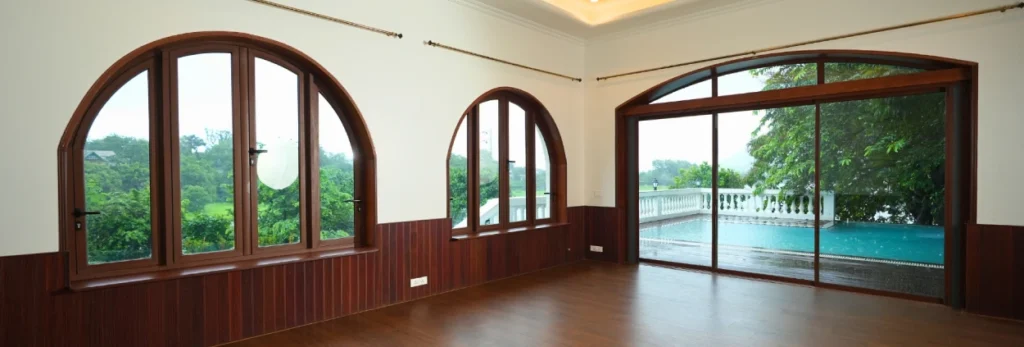
There’s a particular kind of magic that happens when you open a large glass door, and the boundary between your living room and your garden simply dissolves. No wall, no threshold, just a seamless continuation of space. For homeowners across India, whether in a sprawling Lonavala bungalow, a Kolkata apartment with colonial views, or a contemporary flat in Pune, this is no longer an aspirational fantasy. It’s entirely achievable, and it’s driving one of the most exciting shifts in residential architecture today.
Modern sliding glass doors have evolved well beyond their utilitarian origins. Today, they’re architectural centrepieces, engineered for performance, designed for elegance, and built to suit the very specific demands of the Indian climate. If you’re renovating, building from scratch, or simply reconsidering how your home interacts with the world outside, understanding the current landscape of sliding door design is a genuinely worthwhile exercise.
Why Have Glass Doors Become Central to Contemporary Home Design?
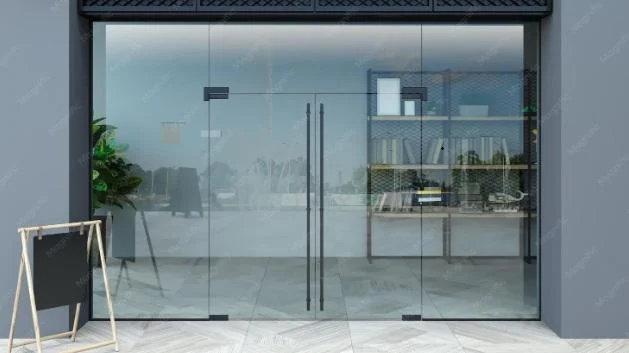
The appeal of large glass doors isn’t difficult to explain. Natural light does something to a room that no artificial lighting can replicate: it shifts mood, makes spaces feel larger, and creates a sense of warmth and openness that’s deeply calming. When you combine that with the visual connection to an outdoor space: a garden, a terrace, a balcony with a city view, the effect is transformative.
But beyond aesthetics, there’s a broader shift in how urban Indians are thinking about their homes. Post-pandemic, the home became everything: office, gym, sanctuary, and social space. This reshaped priorities. Homeowners began to demand more from their interiors: more light, better ventilation, stronger connections to outdoor spaces. Patio doors and balcony sliding doors answered that call directly.
Architects and interior designers working across Mumbai, Bengaluru, Hyderabad, and Chennai have all noted a significant uptick in demand for large-format glass openings. The reasoning is consistent: people want their homes to breathe, and they want the outside world, or at least its best parts, to feel accessible from within.
The Most Popular Sliding Door Designs Right Now
Not all sliding glass doors are created equal, and the variety available today reflects the market’s genuine sophistication. Here’s a look at the designs that are setting the tone in modern Indian homes.
-
Lift and Slide Doors
Among the most popular choices for large openings, lift-and-slide mechanisms such as Eternia’s Duraslim Edge Lift & Slide system allow panels of considerable size and weight to glide effortlessly along a track.
The panels literally lift slightly when the handle is engaged, releasing them from their seals so they can slide smoothly. This is excellent for homes with expansive garden-facing walls or panoramic views with near-frameless visual that puts the view front and centre, not the frame.
-
Minimal Sliding Doors
If the lift-and-slide represents grandeur, the minimal slider represents restraint taken to its logical extreme. These doors feature flush profiles on all four sides, meaning the glass appears to float within the wall with almost no visible framework. The Duraslim Edge Minimal range, for example, features a 20mm interlock and a sightline of just 20mm, practically invisible.
This style suits contemporary architecture particularly well: think exposed concrete, clean lines, and interiors where visual clutter is actively avoided. The result is a sliding glass patio door that feels more like a glass wall that happens to open.
-
Slide and Fold Doors
For homeowners who want to eliminate the barrier between indoors and outdoors completely, slide-and-fold systems are the answer. Multiple panels fold and stack at one or both ends of the opening, creating an unobstructed aperture.
This is particularly popular for homes with large terraces, courtyards, or pool-facing living rooms where the goal is complete indoor-outdoor integration.
Patio Doors and Balcony Sliding Doors: Choosing the Right System for Your Space
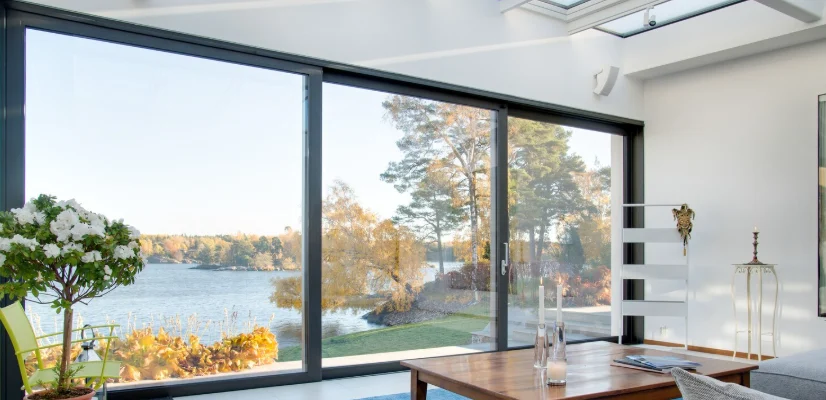
The terminology can be a little confusing, so it’s worth clarifying. Patio doors and balcony sliding doors share the same basic DNA; they’re both designed to connect interior spaces with an outdoor area, but the context shapes the choice considerably.
- A patio door typically connects a ground-floor living area to a garden or outdoor terrace. These openings are often wide, and the emphasis is on seamless transition, the ability to entertain outdoors as naturally as indoors. For these applications, lift-and-slide or slide-and-fold systems tend to work best, as they accommodate larger panel sizes and create the widest possible openings.
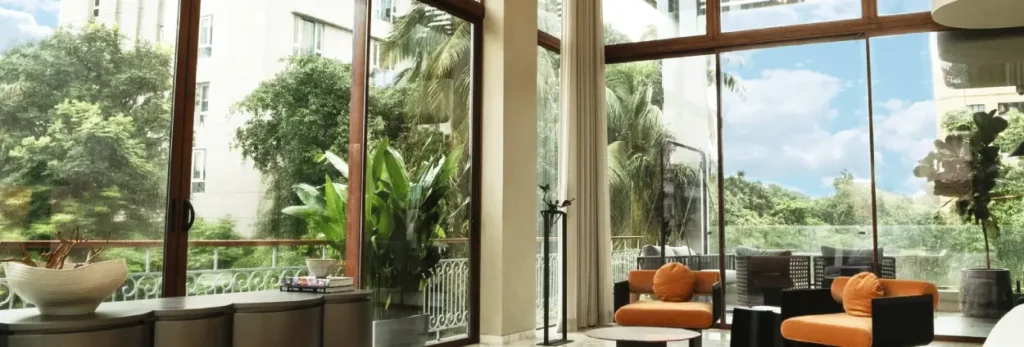
- A balcony sliding door serves a slightly different function. In urban apartments, particularly in high-rises, balconies are often smaller, and the door needs to perform reliably against wind, rain, and noise, sometimes at considerable heights. Here, performance certification matters enormously.
This is where systems like Eternia’s WiWA certification become relevant. WiWA is a patented performance rating system that rates windows and doors for wind resistance, watertightness, and air sealing. A sliding door with a WiWA score of 10, the maximum, has been independently tested to resist winds of up to 3kPa, prevent water ingress at 600Pa, and maintain air sealing at 600Pa.
Sliding Door Trends That Are Shaping Indian Interiors in 2026
Several distinct trends are currently influencing how sliding glass doors are being used in Indian homes, and they’re worth paying attention to whether you’re designing a new home or renovating an existing one.
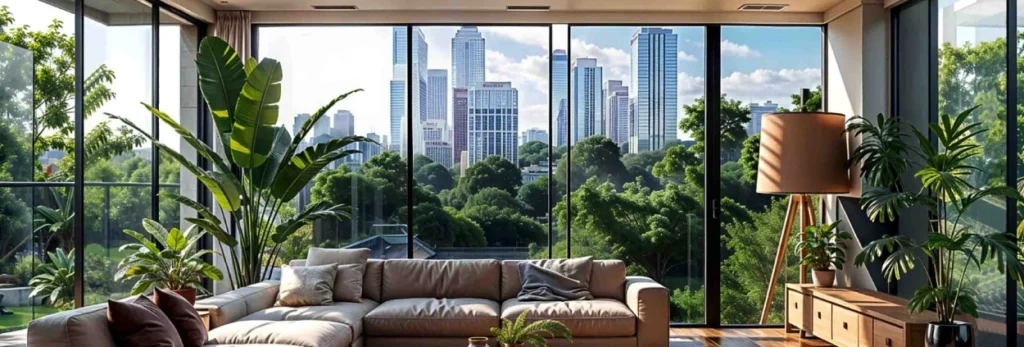
- Floor-to-ceiling glass openings are increasingly common, particularly in premium residential projects. Rather than doors that sit within a wall, these systems essentially replace the wall; the glass runs from slab to slab, making rooms feel dramatically larger and flooding them with light.
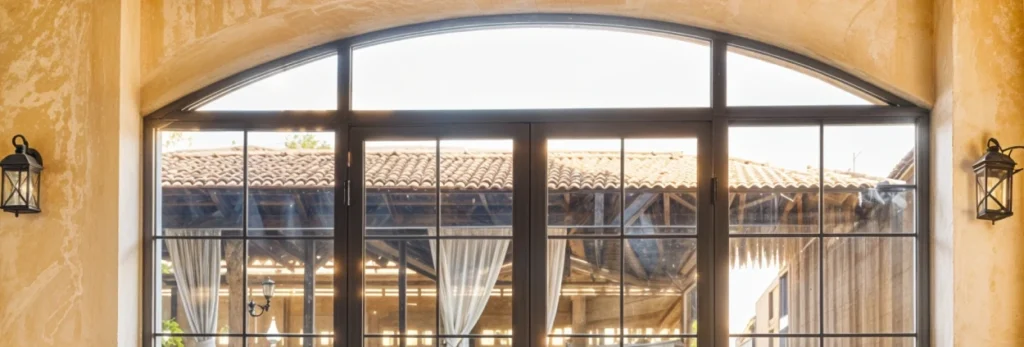
- Dark frame aesthetics have gained significant traction. Graphite Grey, Night Black, and Starlight Black frames create a striking contrast against white or light-toned walls and bring a contemporary European sensibility to Indian interiors.
- Integrated pest mesh is a distinctly Indian trend. The reality of Indian summers- mosquitoes, dust, and insects- means that beautiful large openings need a practical solution.
Conclusion
The modern sliding glass door is one of those rare design elements that manages to be simultaneously practical and genuinely transformative. Done well, a sliding glass patio door or balcony sliding door doesn’t just improve a room; it changes how you experience your entire home. Light flows differently. Space feels more generous. The outdoors becomes an extension of your living area rather than something viewed through a window.
The key is choosing thoughtfully. Trends are useful for inspiration, but the right sliding door design for your home depends on your specific space, climate, budget, and long-term expectations for performance and maintenance. Aluminium sliding doors, particularly those built on advanced alloy systems and backed by genuine performance certification, represent the most sensible choice for most Indian homeowners today.
Whether you’re drawn to the drama of a floor-to-ceiling lift-and-slide system or the quiet elegance of a minimal sliding design, the options have never been better. The question is simply which view you want to bring inside.
Frequently Asked Questions
Yes, aluminium is one of the best materials for coastal environments. It doesn't corrode in salt air, resists UV damage, and maintains its finish without the warping or swelling issues that affect timber. Proprietary alloys like Duranium, used in Eternia's door systems, offer additional strength and durability suited to the Indian climate.
Look for independently certified performance ratings rather than generic marketing claims. Systems rated under WiWA certification, Eternia's patented performance framework, are tested for wind resistance, watertightness, and air sealing to specific, measurable standards. A WiWA score of 10/10 indicates the highest level of certified protection.
Modern sliding door systems accommodate a wide range of glass types including toughened, double-glazed, laminated, acoustic laminated, frosted, tinted, and even switch glass (smart glass that transitions from clear to opaque). The right choice depends on your priorities, thermal efficiency, noise reduction, privacy, or solar control.
Very little, which is one of their key advantages. Aluminium doesn't need repainting, re-sealing, or termite treatment. Periodic cleaning of the tracks and light lubrication of the rollers are generally sufficient. Quality systems with cycle-tested rollers and hinges should operate smoothly for many years without significant intervention.
Patio doors typically connect ground-floor interior spaces to gardens or outdoor terraces and are designed for wide openings with maximum indoor-outdoor flow. Balcony sliding doors are more commonly used in apartments and need to perform reliably against wind, rain, and noise, often at significant heights. The functional requirements differ, so the product specification should too.


Our consultants will give a closer Look!
WHATSAPP VIDEO CALL AT YOUR CONVENIENCE
Schedule a Video call or Request Real Images and Videos